Rollator Walking Frame
WhatsApp us
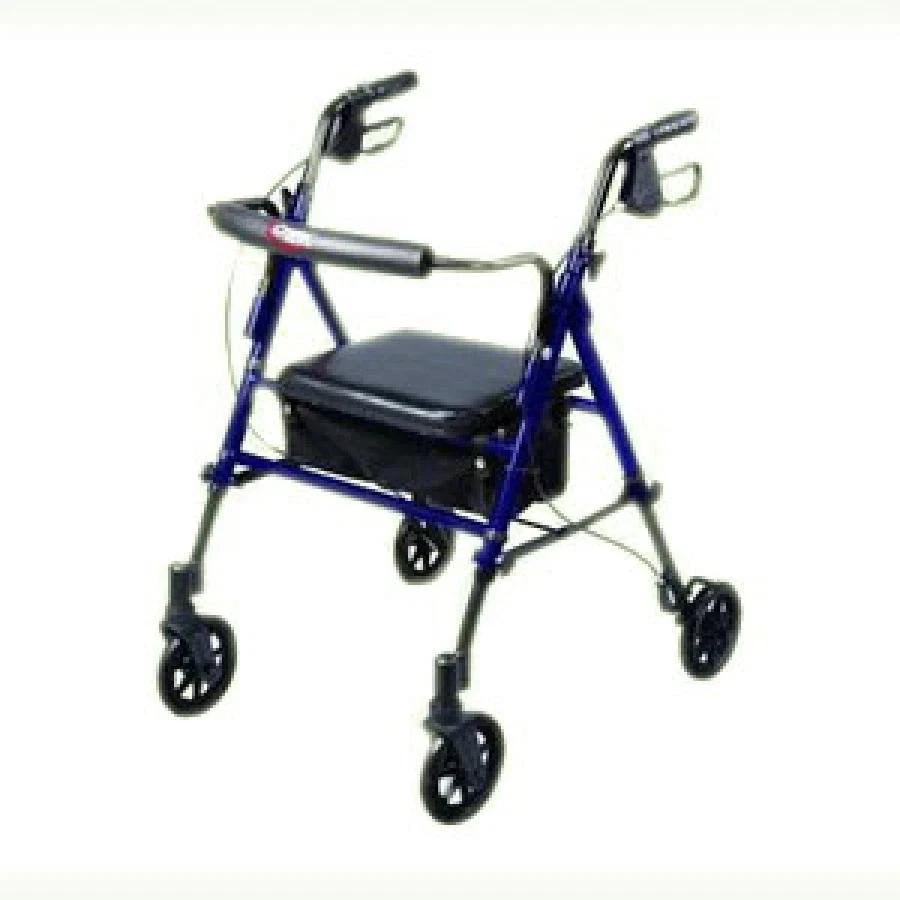
- Handle Height: Stand straight with your arms relaxed at your side; the handgrips should align perfectly with your wrist bone to ensure a comfortable 20-to-30-degree bend in your elbows.
- Wheel Size: Choose 6-inch wheels if the device is exclusively for smooth indoor floors. Opt for 8-to-10-inch wheels if you plan to navigate grass, gravel paths, or cracked sidewalks.
- Weight Capacity: Standard aluminum models carry up to 130–150 kg (300–350 lbs), while bariatric or heavy-duty steel options support up to 220 kg (500 lbs).
KSh 10,000.00
- Built-In Seat & Backrest: Offers an immediate place to rest and build leg strength when walking longer distances outdoors or in shopping centers.
- Loop Braking System: Handgrips feature bicycle-style brakes that can be squeezed to slow down or pushed downward to fully lock the wheels for safe
- Storage Basket/Pouch: Positioned underneath the seat or on the front frame to easily carry groceries, personal bags, or books without overloading your hands.
- Swiveling Front Wheels: Large front wheels (typically 7.5 to 10 inches) swivel easily to handle tight corners, doorframes, and uneven pavement
Related products
-
-
Medical Equipments, Monitoring Devices
Plastic Fetoscope
The Fetoscope is a reliable obstetric diagnostic instrument designed for monitoring fetal heart sounds during pregnancy. Commonly used by midwives, obstetricians, and healthcare professionals, it allows clear and accurate auscultation of the fetal heartbeat, helping assess fetal wellbeing during antenatal checkups and labor. The device is lightweight, easy to use, and does not require power, making it ideal for both clinical and outreach settings.
SKU: n/a -
Medical Equipments
Oxygen Concentrator 10L
The 10L Oxygen Concentrator is a high-capacity medical device designed to deliver a continuous and reliable supply of concentrated oxygen for patients requiring high oxygen flow. Suitable for hospitals, clinics, and home care settings, it provides efficient oxygen therapy with stable performance, low noise operation, and user-friendly controls.
SKU: n/a -
Medical Equipments
FIRST AID KIT-MEDIUM
A First Aid Kit is a compact and well-organized medical kit designed to provide immediate care for minor injuries and emergencies. It contains essential medical supplies to help manage cuts, burns, sprains, and other common injuries at home, workplaces, schools, vehicles, and outdoor activities.
SKU: n/a -
Hospital Furniture, Medical Equipments
Hospital patient stretcher
A hospital patient stretcher, commonly referred to simply as a “stretcher” or “gurney,” is a medical device used for transporting patients who require medical care. They are commonly seen in emergency departments, ambulances, and various other hospital settings.
SKU: n/a